
What Is Body Mass Index (BMI)?
Body Mass Index (BMI) is a simple way to check whether your body weight is appropriate for your height.
In simple terms, BMI helps answer one key question:
Is my weight too low, healthy, or too high for my height?
BMI is calculated using a person’s weight and height. It does not directly measure body fat, but it provides a useful estimate to identify possible weight-related health risks. BMI is widely used in clinical and public health practice and is recommended by the World Health Organization (WHO).
Why Does Body Mass Index (BMI) Matter?
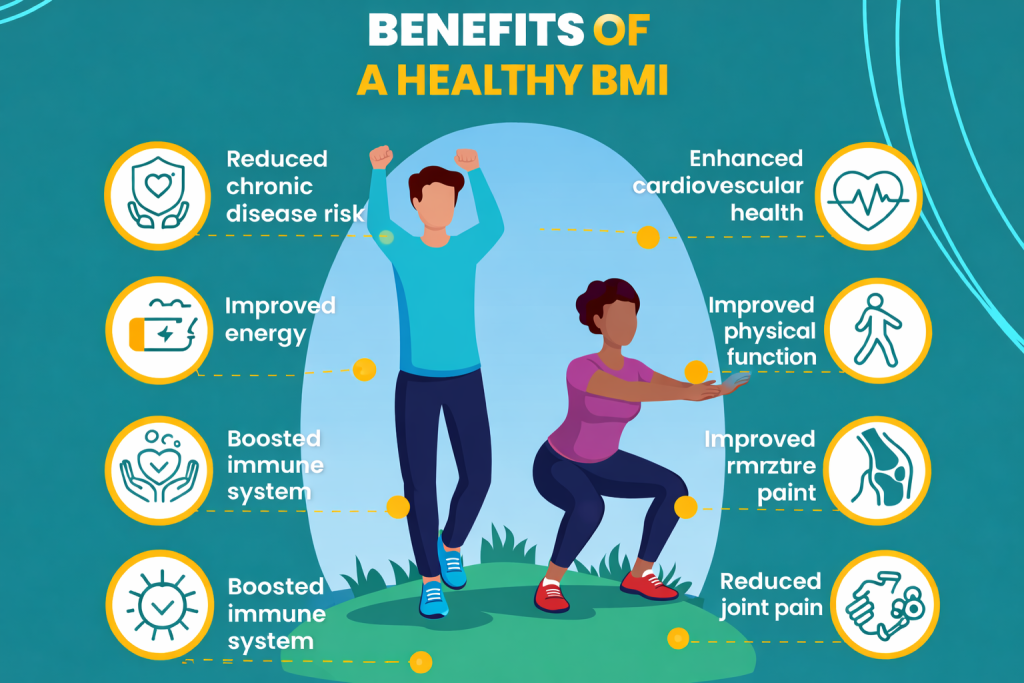
Body Mass Index (BMI) matters because it helps identify whether a person’s body weight may increase their risk of health problems. Maintaining a healthy body weight plays an important role in disease prevention, physical functioning, and overall wellbeing.
An unhealthy BMI is linked to a higher risk of:
- Heart disease
- High blood pressure
- Type 2 diabetes
- Stroke
- Poor immunity and nutritional deficiencies, especially among underweight individuals
Key facts you should know
- Globally, more than 1.9 billion adults are overweight, and over 650 million are living with obesity, according to the World Health Organization.
- Overweight and obesity contribute to more than 4 million deaths worldwide each year, mainly due to heart disease, diabetes, and other non-communicable diseases.
- Rates of overweight and obesity are rising fastest among adults aged 18–49 years and in low- and middle-income countries, including across Africa.
Because of this growing global burden, BMI is widely used in clinical and public health settings. It is simple, cost-effective, and supported by strong scientific evidence, making it a practical tool for early identification of risk and prevention of weight-related diseases.
How Is BMI Calculated?
BMI is calculated using the following formula:
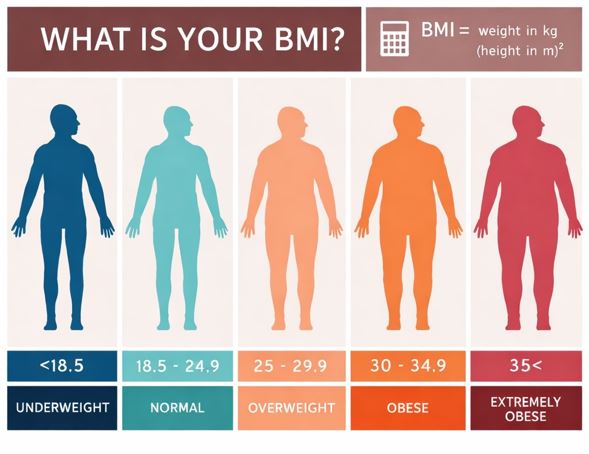
BMI = weight (kg) ÷ height² (m²)
Example:
If a person weighs 70 kg and is 1.75 m tall:
70 ÷ (1.75 × 1.75) = 22.9
A BMI of 22.9 falls within the healthy range.
To make this easier, you can use the Kepos Health BMI Calculator, which automatically calculates your BMI when you enter your height and weight.
Understanding BMI Results
For adults, BMI values are grouped into four main categories based on WHO classification:
| BMI Value | Category |
|---|---|
| Below 18.5 | Underweight |
| 18.5 – 24.9 | Normal (Healthy) weight |
| 25.0 – 29.9 | Overweight |
| 30.0 and above | Obesity |
These categories help estimate health risk, but they do not provide a medical diagnosis.
What Do the BMI Categories Mean?
Underweight (BMI below 18.5)
Being underweight may indicate that the body is not receiving enough energy or nutrients.
Possible health concerns include:
- Frequent illness due to weak immunity
- Anemia
- Bone weakness
- Delayed recovery from illness
What to do:
- Improve dietary intake and meal regularity
- Focus on balanced, nutrient-rich foods
- Seek medical advice if weight loss is unexplained
Normal Weight (BMI 18.5–24.9)
This range is associated with the lowest risk of weight-related health problems, according to the World Health Organization.
What to do:
- Maintain a balanced diet
- Stay physically active
- Monitor your weight periodically
Maintaining a healthy BMI supports long-term heart health, stable energy levels, and overall wellbeing.
Overweight (BMI 25.0–29.9)
Being overweight means excess body weight may begin to affect your health.
Health risks may include:
- High blood pressure
- Type 2 diabetes
- Heart disease
What to do:
- Reduce intake of sugary and highly processed foods
- Increase daily physical activity
- Aim for gradual and sustainable weight changes
- Seek medical guidance if you have other health conditions
Obesity (BMI 30.0 and above)
Obesity is associated with a significantly higher risk of chronic diseases and reduced quality of life.
According to the World Health Organization, obesity increases the risk of diabetes, heart disease, stroke, and certain cancers.
What to do:
- Seek guidance from a qualified healthcare professional
- Focus on long-term lifestyle changes
- Manage related conditions early
- Avoid unsafe or unproven weight-loss products
What BMI Does NOT Tell You
Although BMI is a useful screening tool, it has important limitations. It does not:
- Distinguish between muscle mass and body fat
- Show how fat is distributed in the body
- Apply equally to athletes, pregnant women, older adults, or children
For this reason, WHO and other health authorities recommend interpreting BMI alongside other indicators such as waist circumference, diet, physical activity, and overall clinical assessment.
BMI and Nutrition: Understanding the Connection

BMI reflects the balance between energy intake (food) and energy use (physical activity).
Healthy nutrition helps by:
- Providing essential nutrients
- Preventing excessive calorie intake
- Supporting metabolism
- Promoting stable, healthy weight over time
Healthy eating patterns are more effective and safer than extreme or restrictive diets.
When Should You See a Healthcare Professional?
You should consider medical advice if:
- Your BMI is outside the healthy range
- You experience sudden or unexplained weight changes
- You feel persistent fatigue, weakness, or loss of appetite
- You have medical conditions affected by body weight
BMI is a starting point for health assessment, not a final judgment.
Key Takeaway
Body Mass Index (BMI) is a simple and effective tool for understanding weight-related health risks. When combined with balanced nutrition, regular physical activity, and professional guidance, BMI supports healthier lifestyle choices and early disease prevention.
Frequently Asked Questions (FAQs)
A healthy BMI for adults is 18.5–24.9, according to the World Health Organization. This range is linked to the lowest risk of weight-related diseases.
Yes. BMI does not measure body fat directly and may be less accurate for athletes, pregnant women, older adults, and children. It should be interpreted with other health indicators.
Focus on healthier eating, regular physical activity, and gradual weight changes. Seek medical advice if weight changes are unexplained or affect your health.
No. Children and adolescents are assessed using age and sex-specific growth charts, not adult BMI categories.
Not always. A normal BMI is positive, but overall health also depends on diet, physical activity, and other health indicators.
Medical Disclaimer
This content is for health education purposes only and does not replace professional medical consultation. Always seek advice from a qualified healthcare provider for personal health concerns.
Call to Action
Calculate your BMI today using the Kepos Health BMI Calculator
Adopt healthy eating and regular physical activity
Share this article to help others understand BMI and prevent disease
















 is, why it matters for your health, and what underweight, normal, overweight, and obesity mean.)
I really like what you guys are up too. This kind of clever work and reporting!
Keep up the excellent works guys I’ve incorporated you guys
to our blogroll.