
Artificial intelligence in healthcare (AI) is increasingly becoming part of healthcare systems around the world. In Rwanda, AI is now being tested as a practical tool to support health workers, improve access to care, and strengthen the health system, particularly at the level of primary healthcare.
Earlier in 2026, senior officials from Rwanda’s Ministry of Health highlighted to international media, including Radio France Internationale (RFI) and the Associated Press (AP), the country’s efforts to responsibly introduce artificial intelligence in healthcare. These reports show how Rwanda is carefully using innovation while keeping people and patient safety at the center of care.
Senior Ministry of Health Officials Speak on AI in Healthcare
In February 2026, Speaking to RFI, Muhire Andrew, a senior official working in Digital Health at the Ministry of Health, explained that artificial intelligence in healthcare is being used as a support tool, not as a replacement for doctors, nurses, or other health professionals.
According to him, AI helps health workers by:
- Processing health information more quickly
- Supporting clinical decision-making
- Improving patient follow-up and organization of care
He clearly emphasized that all final medical decisions remain with trained health professionals and that patient safety, ethics, and data protection are key priorities in Rwanda’s digital health strategy.
🔗 you can also read:
How Artificial Intelligence Is Transforming Healthcare: 7 Key ways – KEPOS HEALTH
The Associated Press published a related article explaining that Rwanda plans to pilot AI-powered technology in more than 50 primary healthcare clinics.
According to AP, these artificial intelligence tools are expected to:
- Help health workers analyze symptoms and patient data
- Reduce time spent on administrative paperwork
- Improve referrals and follow-up care
- Support better use of health data for planning and decision-making
A Ministry of Health official told the Associated Press that artificial intelligence in healthcare is intended to reduce workload and improve the quality of services, while ensuring that healthcare professionals remain fully responsible for patient care.
Rwanda currently has about one healthcare worker for every 1,000 people. This figure is far below the globally recommended ratio of four healthcare workers per 1,000 people. As a result, doctors, nurses, and community health workers face heavy workloads, especially in primary healthcare settings.
In this situation, artificial intelligence in healthcare offers practical support. AI can automate routine administrative tasks, help analyze patient information faster, and provide clinical decision-support tools. As a result, health workers can care for more patients efficiently while maintaining quality and patient safety.
The Role of the Gates Foundation in AI Healthcare Pilots
Rwanda will pilot artificial intelligence powered technology in more than 50 health clinics as part of a new initiative supported by the Bill & Melinda Gates Foundation, which aims to expand AI tools to 1,000 clinics across Africa.
According to Andrew Muhire, a senior official at Rwanda’s Ministry of Health, the technology is designed to support, rather than replace clinical judgment, while improving efficiency within an already stretched health system. The initiative, known as Horizons1000, was launched by the Gates Foundation in partnership with OpenAI, with $50 million in joint funding over two years to help reduce health inequalities.
According to reporting by the Associated Press, these AI pilots form part of a broader international effort to responsibly introduce artificial intelligence into primary healthcare settings, particularly in low- and middle-income countries.
The Gates Foundation has a long history of supporting Rwanda’s health sector, especially in:
- Strengthening primary healthcare services
- Expanding and improving digital health systems
- Promoting effective use of health data and innovation
Through this initiative, the foundation is helping to test safe, ethical, and effective AI tools that can support health workers without compromising patient safety, data privacy, or equity.
How AI fits into Rwanda’s digital health strategy
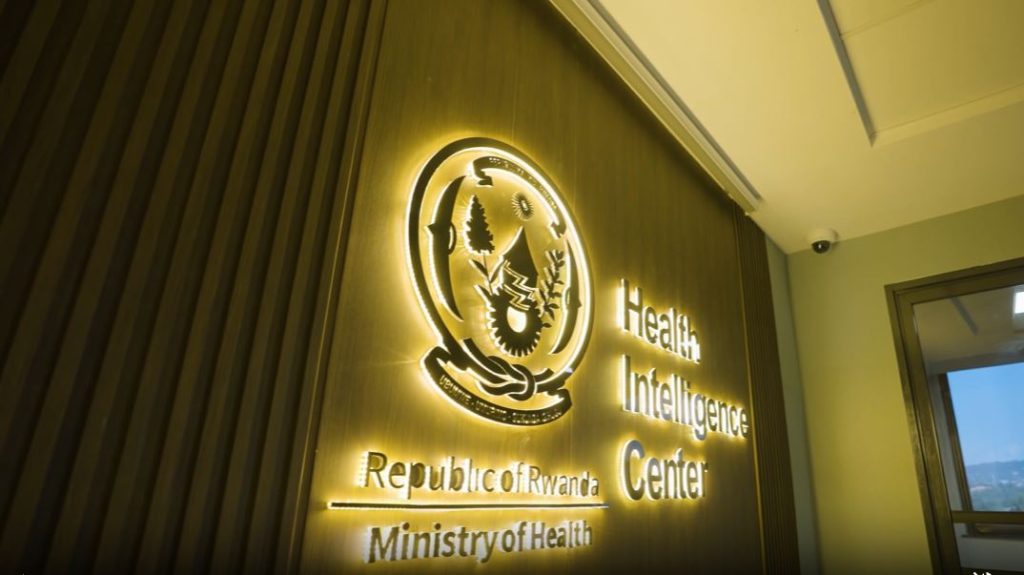
Rwanda’s use of artificial intelligence in healthcare builds on years of investment in digital health systems. A key pillar of this work is the National Health Intelligence Center (NHIC), a national platform that brings together health data from multiple sources to support planning, monitoring, and decision-making.
AI tools can help analyze this data more efficiently, enabling faster and better-informed decisions at both facility and national levels.
🔗 Learn more about Rwanda’s National Health Intelligence Center (NHIC):
https://www.moh.gov.rw/index.php?id=799
What Artificial Intelligence in Healthcare Means for the Public
For the general public, artificial intelligence in healthcare does not mean robots replacing doctors. Instead, it means:
- Shorter waiting times at health facilities
- Better-organized health services
- Earlier identification of health problems
- More support for doctors, nurses, and community health workers
By helping health workers work more efficiently, artificial intelligence can improve the quality of care that patients receive.
🔗 Learn more about artificial intelligence in healthcare: benefits and risks:
https://keposhealth.com/benefits-risks-artificial-intelligence-healthcare/
Looking Ahead
Rwanda’s careful and responsible approach shows that artificial intelligence in healthcare can be introduced ethically and safely, even in low- and middle-income countries. With strong government leadership, clear rules on data protection, and support from partners such as the Gates Foundation, Rwanda is positioning itself as a leader in digital health innovation in Africa.
As pilot projects continue, Rwanda’s experience may help guide other countries seeking to use artificial intelligence to strengthen their health systems, while ensuring that people remain at the center of healthcare.










We are a gaggle of volunteers and opening a new scheme in our community.
Your site offered us with useful information to work on. You
have done a formidable task and our whole group can be
thankful to you.